The enterprise of the future.

By Nucleo Labs

01

The architecture you inherited

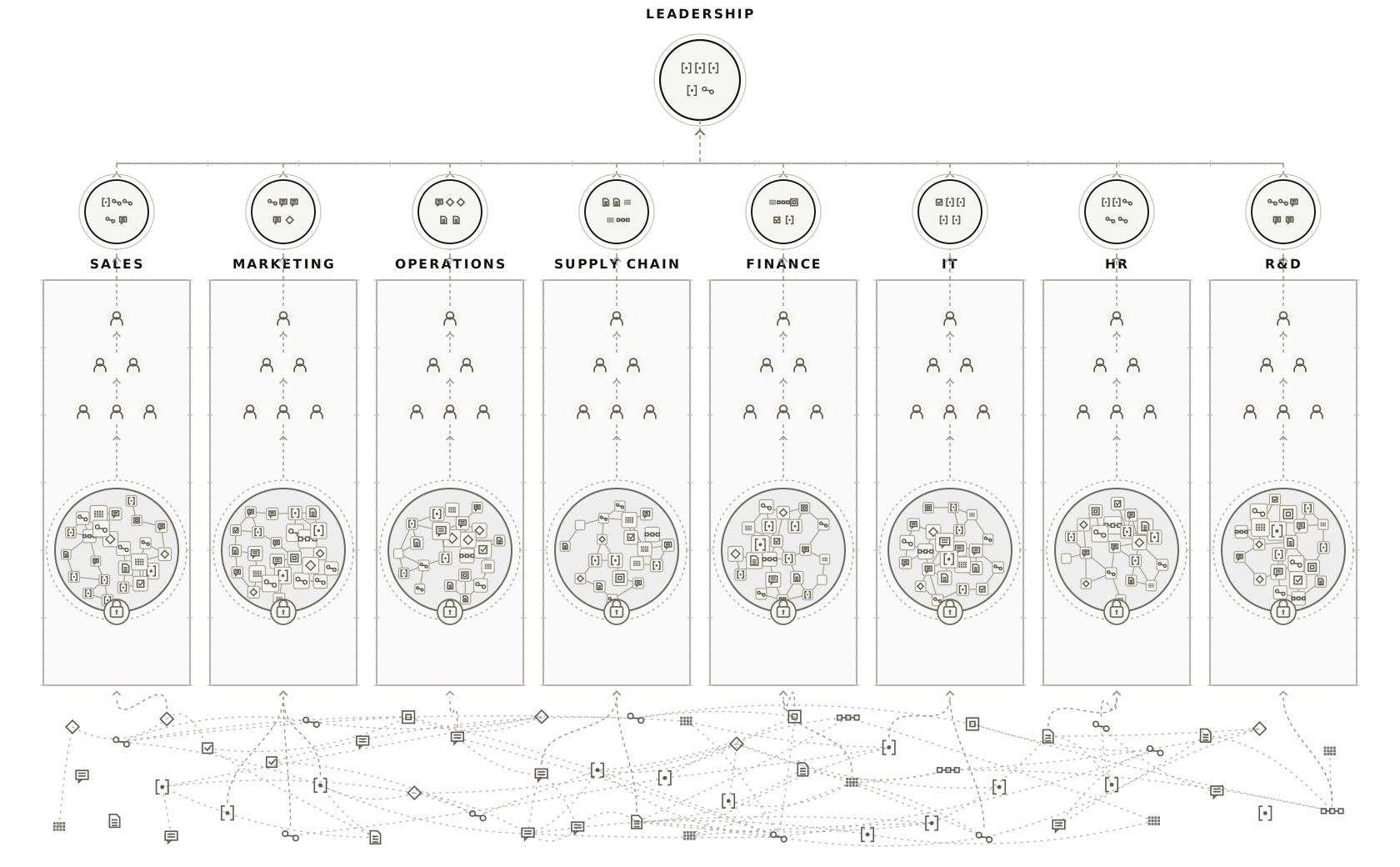
Look at the company you run today and you're looking at the 19th century. Functions stacked into departments, departments into a hierarchy, each unit tuned to optimize its own piece. It was a breakthrough of its age: it let a company grow far larger than any single mind could hold, by breaking the whole into pieces small enough to manage.

It also left a flaw that is quickly becoming a major problem: the knowledge that makes the company work is scattered and trapped. It sits in systems that do not speak to each other, in documents no one can find, and in the heads of people too busy to be asked. Ask where a company really loses its time, its margin, and its best ideas, and the answer is always the same. Not inside the departments. In the space between them, in the handoffs nobody owns.
02

A mine, and no way to dig it

The company already holds everything it needs to operate at a level it cannot reach today. The processes it has refined over decades. The data sitting in a hundred systems that were never meant to talk. The thousands of decisions made every week, and the reasons behind them that nobody wrote down. The relationships with customers and suppliers that live in a few people's inboxes. The commitments buried in contracts, the lessons paid for in old mistakes, the way the best person on each team actually does the work, which they have never had the time to explain.

Most of it is written nowhere. It is the richest deposit of intelligence in the building, and it has never been possible to put it to work at the scale of the whole company. So it stays where it is, sophisticated and stuck, growing in complexity the larger you grow.

Fig. 01 The inherited architecture. Knowledge trapped and locked inside each function, the handoffs tangled in the space between departments.
03

AI is not a tool. It is a new architecture.

For 100 years there was no way to change this. The knowledge was too scattered, too human, too 'alive' to be held by software. That is what just changed. Most of what is sold as AI is still a faster version of the past: a copilot bolted onto an old process, a model that makes one department 20% quicker. But it leaves every wall standing.

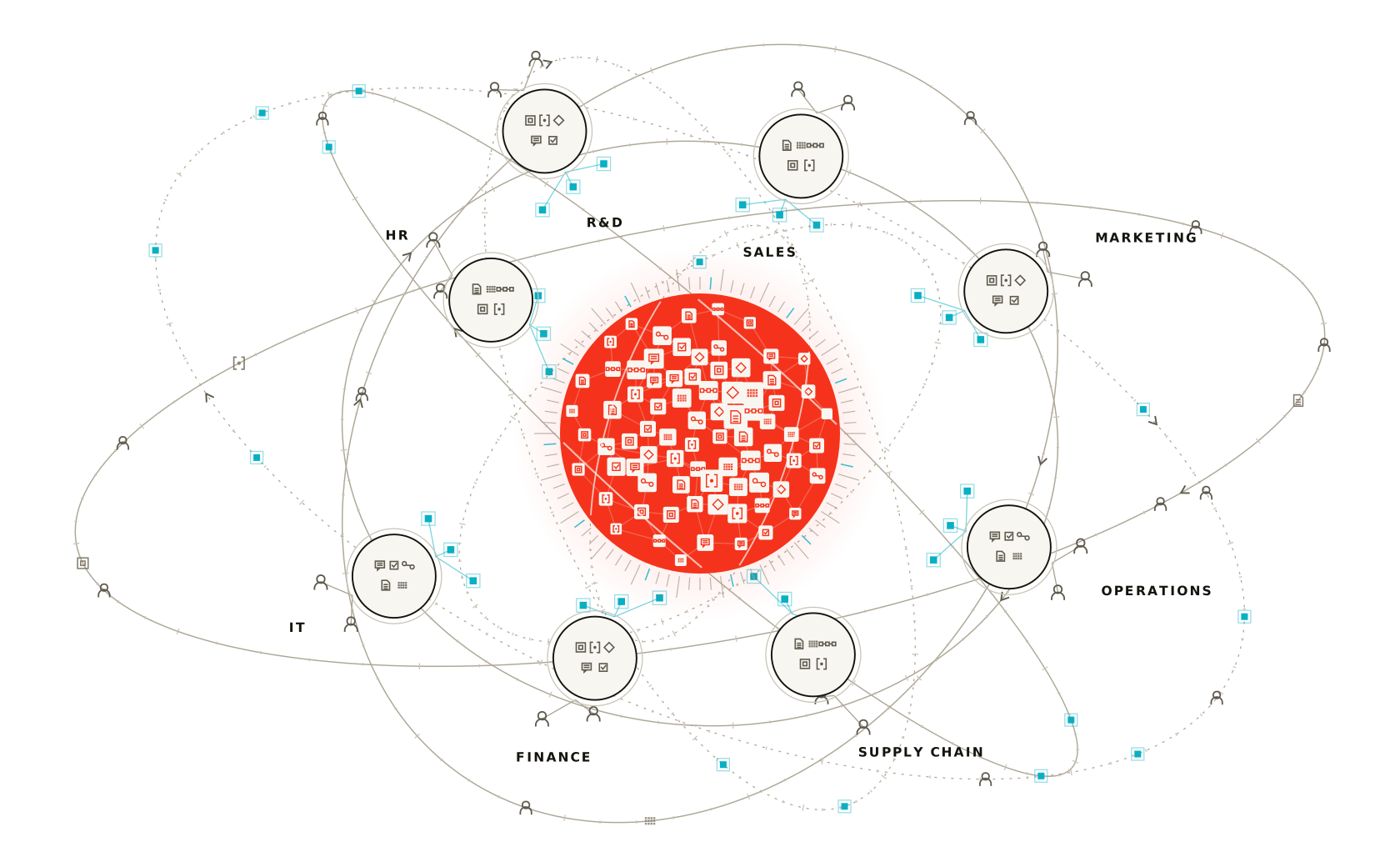
The real change is larger. For the first time, a company can take the knowledge trapped across its functions and turn it into something it owns and runs on: a live, current model of how the work actually gets done. Not a tool the company uses. A living and collective intelligence the company runs on. A few years from now, this is what people will mean when they call a company AI-native. And the ones that win will not be those that bought the most AI. They will be the ones that rebuilt themselves around the intelligence they already had.

04

What the enterprise of the future looks like

Picture your company a few years from now. The knowledge is no longer scattered. It has become a single living record of how the company works, kept current as the work changes, governed, and owned by the company itself, not rented inside a model that is different every six months. Around that intelligence works a new kind of workforce. The people are still there, but their work has changed: they no longer carry out the repetitive tasks, they direct them, their expertise turned from doing the work to defining how it should be done.

Beside them work agents, thousands of virtual employees handling the complex work that used to take a full team and a week. The walls between departments get thinner and thinner, and then fall, because intelligence does not stop at the edge of a function. Work that took three days takes three hours. A team of ten does what once needed a hundred. And efficiency, the thing everyone measures first, turns out to be only the floor.

Above it is the part worth building toward: a company that can build products it could never build before, reach markets that were closed at its old scale, and take on work that was never possible while its own intelligence sat locked in the dark. The enterprise stops being the size of its headcount, and becomes the size of what it knows.

Fig. 02 The enterprise re-architected around the intelligence it owns. People and agents operate through it.

The future belongs to those who see it before it is obvious, and build it while everyone else is still out there scouting for the best AI tools.

Own your intelligence.